Covid
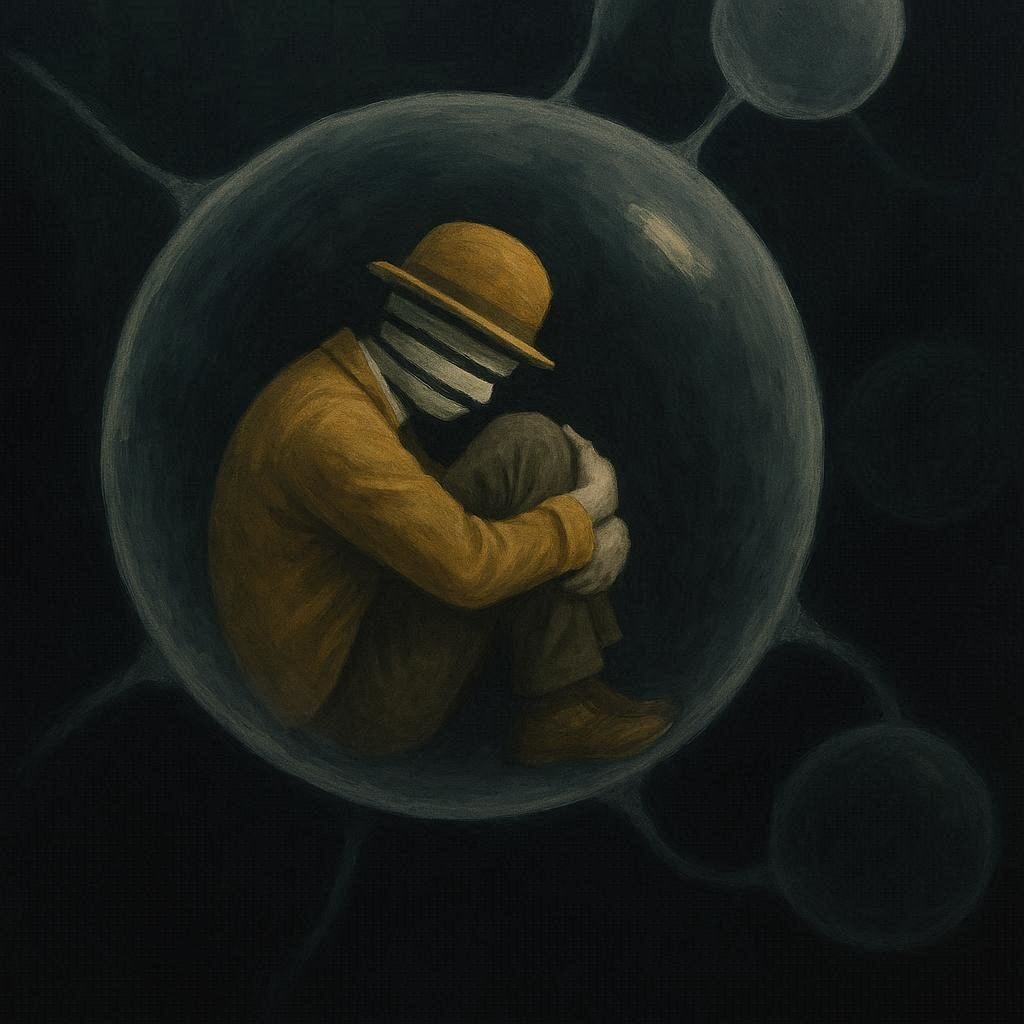
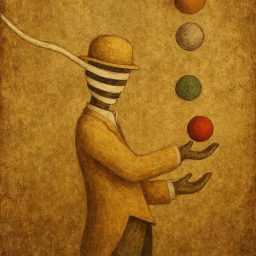
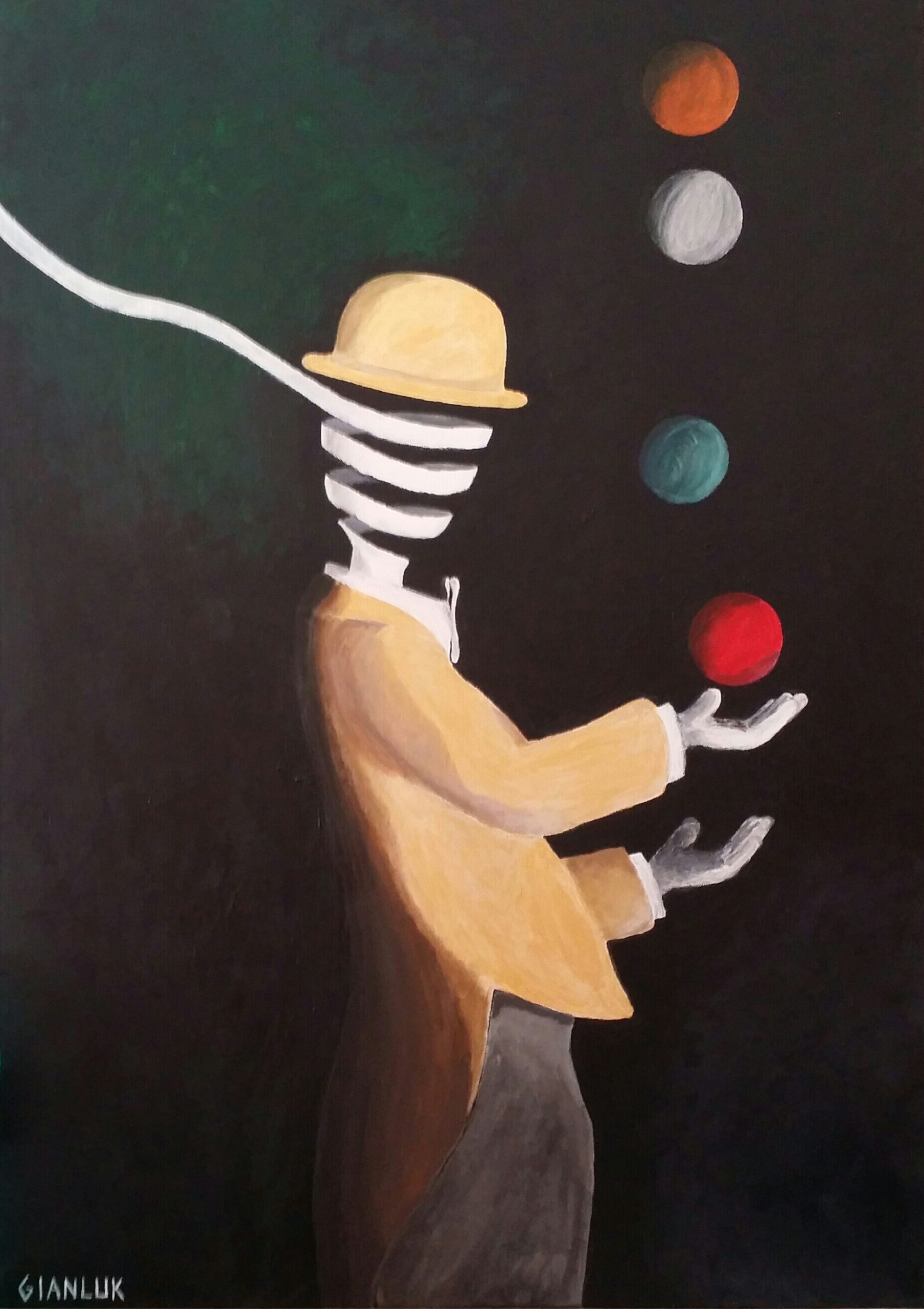
English Version covid. Quando il mondo si fermò, l’arte parlò C’era un silenzio che non avevamo mai sentito prima.Niente traffico, niente voci, niente del rumore ordinario con cui avevamo imparato a non ascoltarci. Solo quattro mura, una finestra, e dall’altra parte — un mondo che improvvisamente faceva paura.È in quel silenzio che queste opere sono nate. Non come decorazione, non come evasione. Come urlo trattenuto, come confessione silenziosa di chi ha preso un pennello e ha fatto l’unica cosa sensata che restava: trasformare il terrore in forma.Il Covid non è stato soltanto una pandemia. È stato uno specchio. Brutale, impietoso, impossibile da evitare. Ci ha mostrato quello che avevamo passato decenni a nasconderci: che siamo fragili. Che la distanza tra la vita e il suo contrario è più sottile di quanto qualsiasi progresso moderno riesca a garantire.La natura non ci aveva chiesto il permesso. Aveva semplicemente ricordato, con la fredda precisione di chi esiste da miliardi di anni, che siamo suoi ospiti — non suoi padroni.Queste opere portano impressa quella memoria. Nei colori compressi, nelle forme che respirano a fatica, nei volti che guardano qualcosa fuori campo. C’è l’ansia dell’attesa. C’è la solitudine — non quella romantica dei poeti, ma quella concreta, fisica, che graffia le pareti alle tre di notte.Eppure c’è anche altro. Perché l’arte nata dalla paura non è mai soltanto paura. È resistenza. È il gesto di chi, anche nel punto più buio, sceglie di creare invece di cedere.L’uomo scopre di essere fragile davanti alla natura. Ma scopre anche — forse per la prima volta davvero — di essere capace di bellezza proprio là dove la bellezza sembra impossibile. Informazioni Generali Nome del progetto Covid Dove lo troverai Nei ricordi di un tempo che mai sarà dimenticato Anno di Inizio del progetto 2020 Covid.When the World Stopped, Art Spoke There was a silence we had never heard before. No traffic, no voices, none of the ordinary noise we had used as an excuse to avoid listening to ourselves. Just four walls, a window, and on the other side — a world that had suddenly become frightening. It was in that silence that these works were born. Not as decoration, not as escape. As a held‑back scream, as a silent confession from someone who picked up a brush and did the only sensible thing left: turn terror into form. Covid was not just a pandemic. It was a mirror. Brutal, merciless, impossible to avoid. It showed us what we had spent decades hiding from ourselves: that we are fragile. That the distance between life and its opposite is thinner than any modern progress can guarantee. Nature had not asked for permission. It simply reminded us — with the cold precision of something that has existed for billions of years — that we are its guests, not its masters. These works carry that memory within them. In the compressed colors, in the shapes that struggle to breathe, in the faces looking toward something outside the frame. There is the anxiety of waiting. There is solitude — not the romantic kind of poets, but the concrete, physical solitude that scratches at the walls at three in the morning. And yet there is something else. Because art born from fear is never only fear. It is resistance. It is the gesture of someone who, even at the darkest point, chooses to create instead of surrender. Human beings discover they are fragile before nature. But they also discover — perhaps for the first time — that they are capable of beauty precisely where beauty seems impossible. Vite Sospese Mondo marcio L’uomo in quarantena Il virologo Goldrake vs corona virus
Società
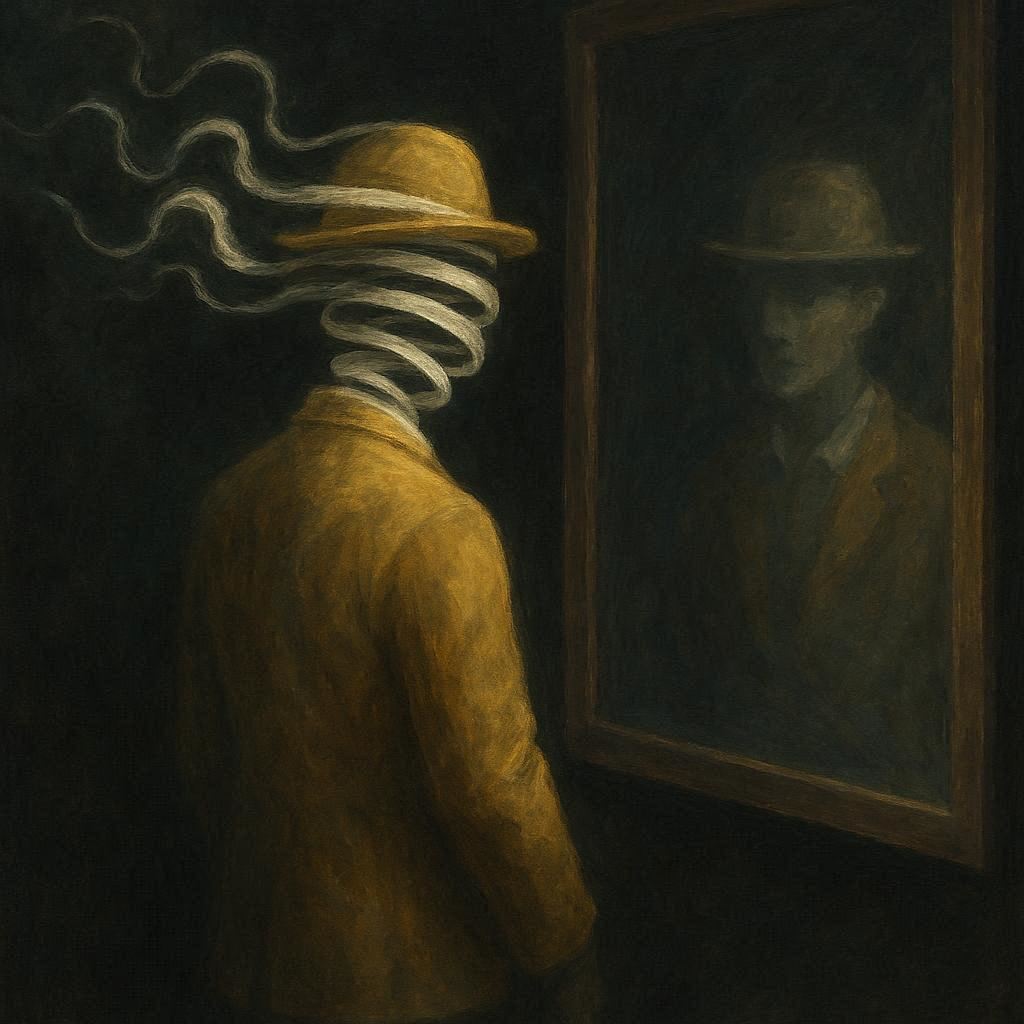
English Version Società Non troverai risposte qui. Solo domande migliori. L’arte che sentenzia è arte morta. Quella che arriva con il significato già impacchettato non ha bisogno di te — ti vuole spettatore, non interlocutore.Queste opere non funzionano così.Ogni tela è una domanda lanciata nello spazio tra il quadro e chi lo guarda. Non retorica — quelle arrivano già con la risposta cucita sotto. Una domanda vera. Aperta. Leggermente scomoda, come tutte le domande che contano.La risposta non è nel quadro. È in te. Nel modo in cui ti fermi o non ti fermi, in ciò che senti salire — un disagio, un riconoscimento, una memoria che non avevi convocato.Nessun giudice. Nessuna sentenza. Solo uno specchio obliquo che rimanda un’immagine un po’ diversa da quella che ti aspettavi.L’autovalutazione è l’atto più coraggioso che esista. Non il senso di colpa — quello arriva da solo. Ma la capacità di guardarsi con occhi puliti e chiedersi: chi c’è, qui dentro?Fermati davanti a ciò che ti disturba. Proprio lì c’è qualcosa che ti appartiene. Informazioni Generali Nome del progetto Senza Nome Anno di Inizio del progetto 2015 Society You Won’t Find Answers Here. Only Better Questions. Art that delivers verdicts is dead art. The kind that arrives with its meaning already packaged doesn’t need you — it wants you as a spectator, not a participant. These works don’t operate that way. Each canvas is a question thrown into the space between the painting and the viewer. Not a rhetorical one — those come with the answer stitched underneath. A real question. Open. Slightly uncomfortable, like all questions that matter. The answer isn’t in the painting. It’s in you. In whether you stop or don’t stop, in what rises inside you — discomfort, recognition, a memory you didn’t summon. No judge. No sentence. Just an oblique mirror reflecting back an image slightly different from the one you expected. Self‑evaluation is the bravest act there is. Not guilt — that arrives on its own. But the ability to look at yourself with clear eyes and ask: who is in here? La Ragione La Donna Senza Età La Donna Del Violino L’occhio di Dio l’arca di favara Il violinista del duomo di Milano Il Re e la Regina Il Mondo di Pulcinella Il Lavoro I Sette Vizi capitali I Due Arlecchini Berlino 2050
Verso Itaca
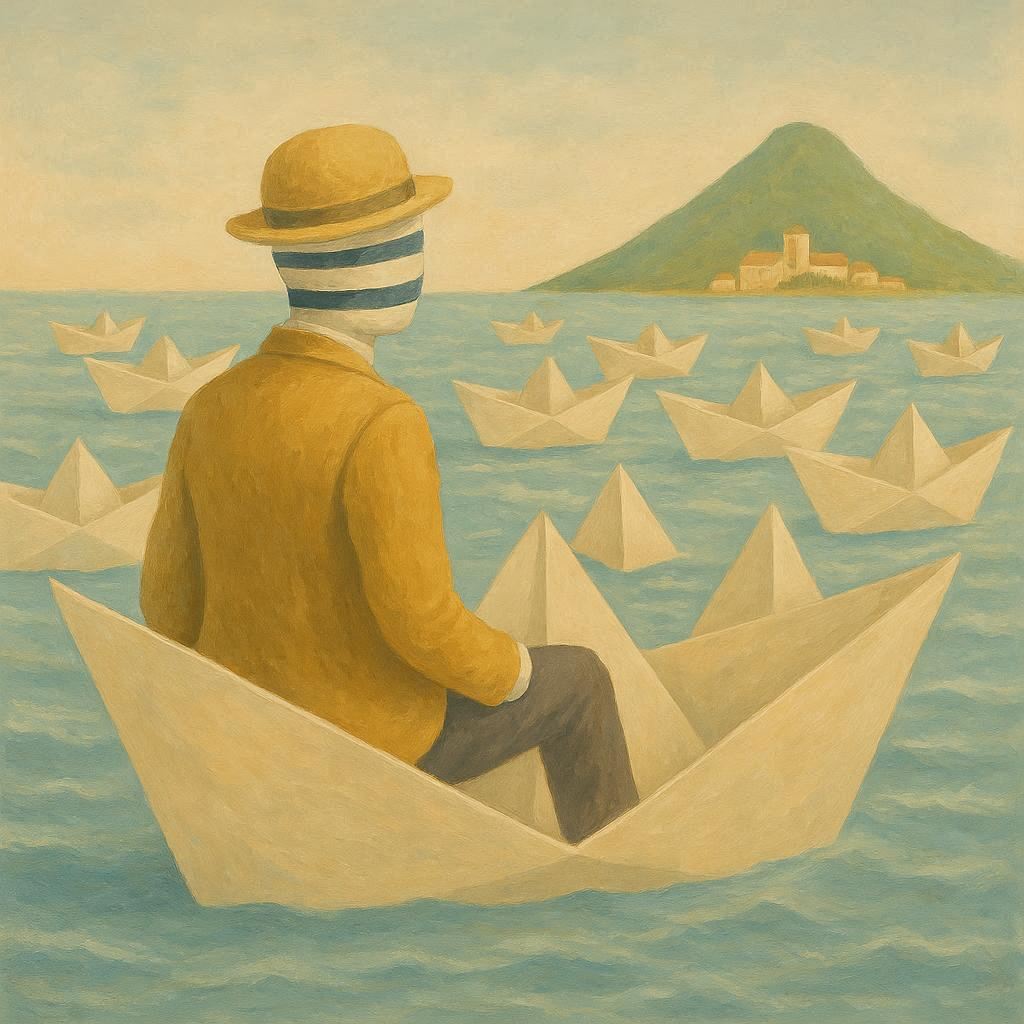
English Version Verso Itaca Come nel viaggio cantato da Kavafis, anche tu sei in cammino — e la meta non è mai il punto. Itaca ti ha dato il viaggio: le strade laterali, le soste inaspettate, le persone che hai incontrato e che ti hanno cambiato senza che te ne accorgessi. Un amico che conosce il tuo silenzio. Una mano che stringe la tua nel buio. Il profumo di una cucina familiare che è, da sempre, la tua idea di casa. La felicità non ti aspetta alla fine. Ti cammina accanto — nelle conversazioni che durano troppo, nel vino condiviso, negli abbracci che nessuna distanza riesce davvero a misurare. Non aver fretta di arrivare. Tieni gli occhi aperti su ogni cosa piccola e preziosa che il percorso ti mette davanti. Perché Itaca non è un luogo: è tutto ciò che hai vissuto per raggiungerla. Il viaggio è già il tesoro. Tu sei già, da qualche parte, in mezzo al mare — e il mare è bellissimo. Informazioni Generali Nome del progetto Verso Itaca Anno di Inizio del progetto 2021 Il messaggio Cogliere nella semplicità l’essenza del viaggio della vita Toward Ithaca As in the journey sung by Kavafis, you too are on your way — and the destination is never the point. Ithaca has given you the journey: the side roads, the unexpected pauses, the people you met who changed you without you noticing. A friend who understands your silence. A hand holding yours in the dark. The scent of a familiar kitchen that has always been your idea of home. Happiness doesn’t wait at the end. It walks beside you — in conversations that last too long, in shared wine, in embraces no distance can truly measure. Don’t rush to arrive. Keep your eyes open to every small and precious thing the path places before you. Because Ithaca is not a place: it is everything you lived through to reach it. The journey is already the treasure. You are already, somewhere, out in the middle of the sea — and the sea is beautiful. Verso Itaca
Amore e Dintorni
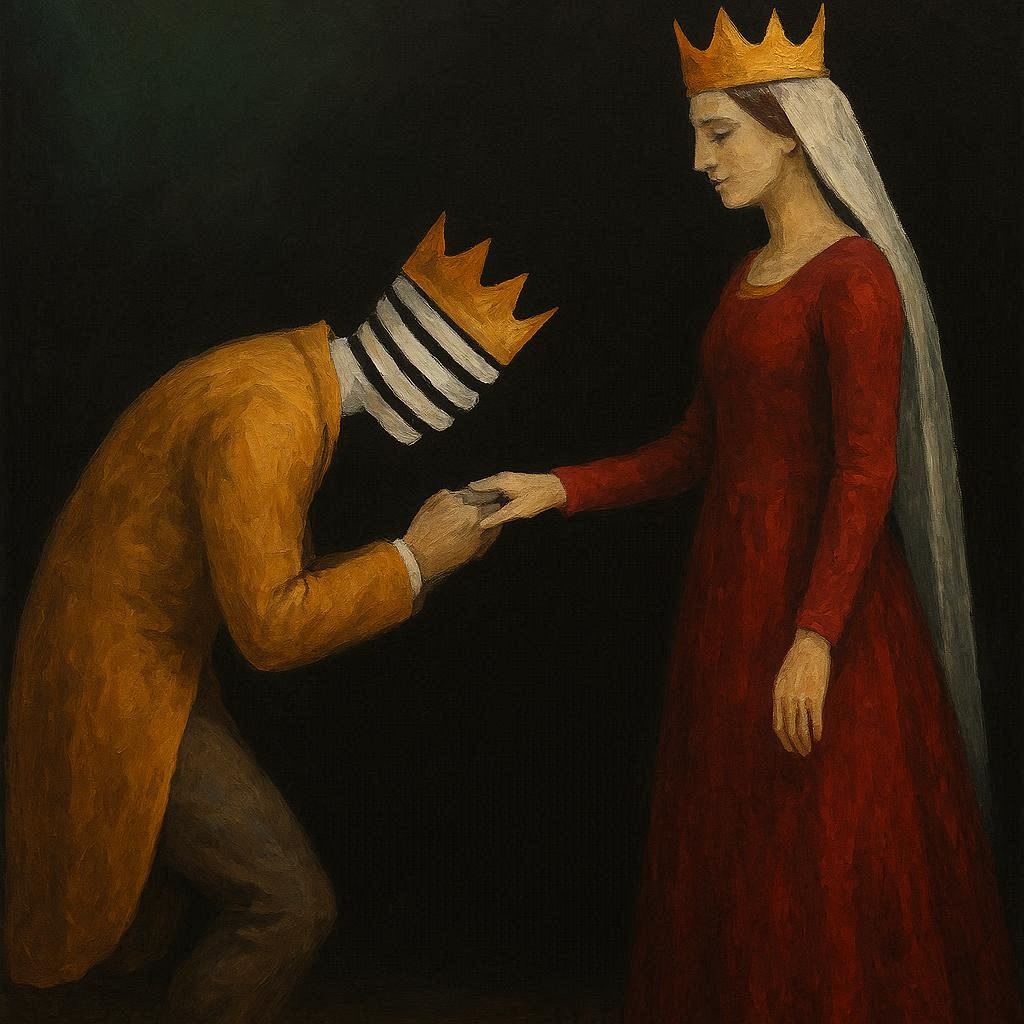
English Version Amore e Ditorni. Emozioni forti L’amore non si presenta mai da solo.Arriva con tutto il suo corteo disordinato — la gioia che toglie il fiato, la gelosia che brucia basso, il desiderio che non si spiega, la paura di perdere ciò che si è appena trovato. Arriva e riarrangia tutto. Sposta i mobili, cambia la luce, rende stranieri i luoghi che conoscevi a memoria.Non chiede se sei pronto. Non aspetta il momento giusto. Queste opere abitano quel territorio senza mappe. Non l’amore delle cartoline — quello patinato, rassicurante, già risolto — ma l’amore vivo, contraddittorio, a tratti incomprensibile. Quello che ti esalta e ti sgomenta nello stesso respiro. Quello che lascia il segno non perché sia stato perfetto, ma perché è stato vero.Le emozioni forti non si addomesticano. Si attraversano.E chi le ha vissute sa che non esistono parole abbastanza precise per contenerle — solo immagini, colori, forme che riescono ad avvicinarsi a ciò che le parole non raggiungono. È esattamente lì che l’arte prende il posto del linguaggio. Dice quello che non si riesce a dire. Mostra quello che si fatica ad ammettere. Guardare queste opere significa riconoscersi. In un gesto, in una tensione, in quella luce particolare che hanno certe mattine dopo una notte intensa — di amore o di pianto, a volte indistinguibili.Significa ricordare che siamo stati, almeno una volta, completamente vivi.E che ne vale sempre la pena. Informazioni Generali Nome del progetto Senza Nome Anno di Inizio del progetto 2015 Love Never Arrives Alone Love never shows up by itself. It comes with its whole unruly procession — the breath‑stealing joy, the low‑burning jealousy, the desire that defies explanation, the fear of losing what you’ve only just found. It arrives and rearranges everything. Moves the furniture, changes the light, makes familiar places feel suddenly foreign. It doesn’t ask if you’re ready. It doesn’t wait for the right moment. These works inhabit that unmapped territory. Not the postcard version of love — polished, reassuring, already resolved — but the living, contradictory, sometimes incomprehensible kind. The kind that lifts you up and overwhelms you in the same breath. The kind that leaves a mark not because it was perfect, but because it was true. Strong emotions cannot be tamed. They can only be crossed. And anyone who has lived them knows there are no words precise enough to contain them — only images, colors, shapes that come closer to what language cannot reach. That is exactly where art takes the place of speech. It says what we cannot say. It reveals what we struggle to admit. Looking at these works means recognizing yourself. In a gesture, in a tension, in that particular light certain mornings have after an intense night — of love or of tears, sometimes indistinguishable. It means remembering that we have been, at least once, completely alive. And that it is always worth it. Viao col Vento Una Pietra sul Passato una notte in bianco Un giorno d’agosto Un bacio a parigi Spine di una Rosa Selfie Roma nella sera dei miracoli Radici Profondo rosso Pescatori Rapiti dalle Stelle Oltre ogni inquietudine
Ambiente
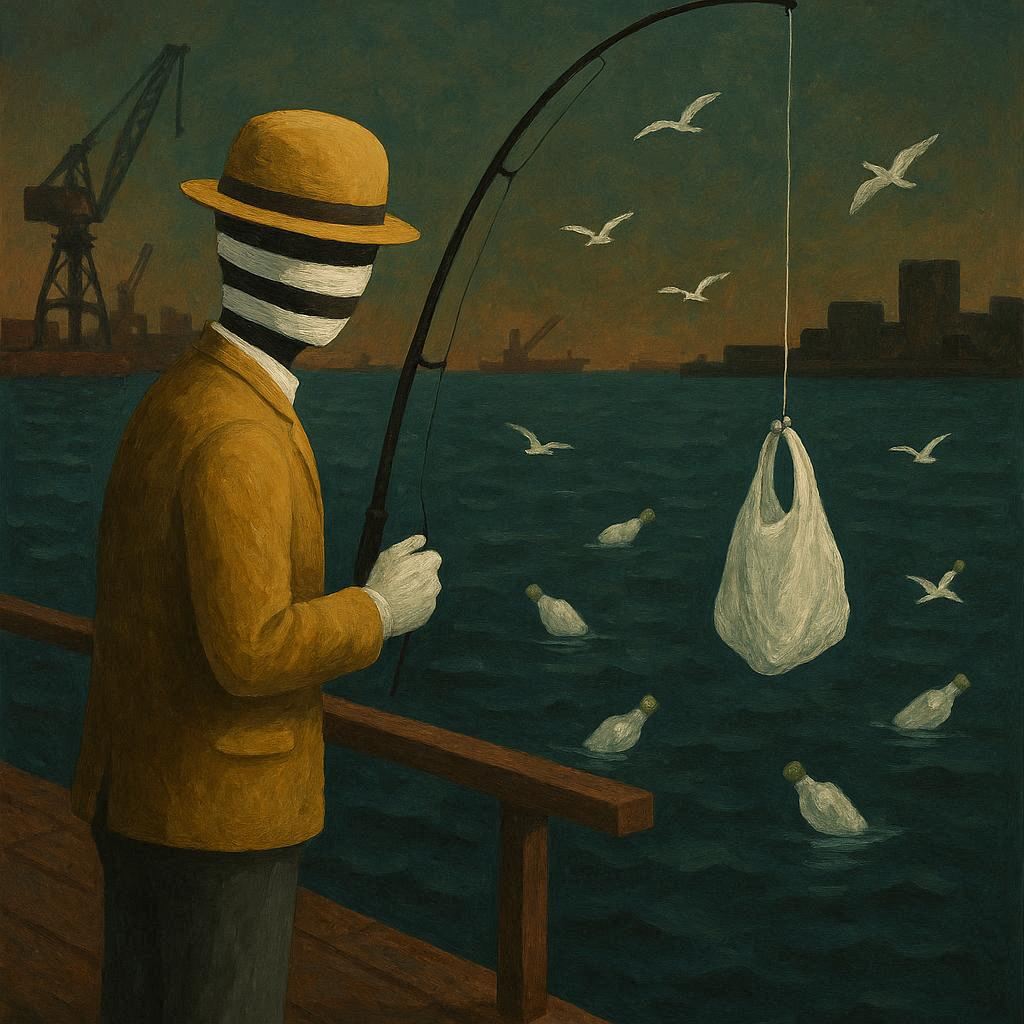
English Version Ambiente e Società Il mare non chiede il permesso. Arriva. Si ritira. Torna.Da prima che esistessero parole per nominarlo, da prima che qualcuno decidesse di fermarcisi vicino e chiamarlo casa — il mare era già lì. Indifferente, maestoso, più antico di qualsiasi cosa l’uomo abbia mai costruito o distrutto.Eppure lo stiamo distruggendo.Queste opere nascono dall’abitare. Non dal visitare — dall’abitare. C’è una differenza enorme tra chi guarda il mare da turista e chi lo conosce nelle stagioni che i turisti non vedono: il grigio di novembre, la violenza di una mareggiata, la luce piatta di un mattino di gennaio in cui sei solo tu e l’orizzonte e nient’altro.Chi ha vissuto quegli ambienti li porta dentro. Nelle mani, negli occhi, nel modo di stare al mondo. E quando quell’esperienza diventa opera, non è paesaggio — è memoria. Non è rappresentazione — è appartenenza.Il mare in queste tele non è sfondo. È protagonista, interlocutore, presenza viva. Porta con sé tutto ciò che contiene e tutto ciò che rischia di perdere. La sua bellezza non è mai solo estetica — è un promemoria urgente, una domanda che brucia sotto la superficie:Fino a quando?Tutelare l’ambiente non è un tema. È la condizione di tutto il resto. Senza mare vivo, senza natura intatta, senza ecosistemi che respirano — non c’è arte, non c’è bellezza, non c’è futuro da immaginare.Guardare queste opere significa guardare qualcosa che potremmo perdere. E capire, forse, che non ce lo possiamo permettere. Informazioni Generali Nome del progetto Senza Nome Anno di Inizio del progetto 2015 Environment and society The Sea Doesn’t Ask for Permission It arrives. It withdraws. It returns. Long before there were words to name it, long before anyone chose to settle beside it and call it home — the sea was already there. Indifferent, majestic, older than anything humanity has ever built or destroyed. And yet we are destroying it. These works are born from inhabiting. Not visiting — inhabiting. There is a vast difference between someone who looks at the sea as a tourist and someone who knows it in the seasons tourists never see: the grey of November, the violence of a storm surge, the flat light of a January morning when it’s just you and the horizon and nothing else. Those who have lived in such places carry them inside. In their hands, in their eyes, in their way of being in the world. And when that experience becomes art, it is not landscape — it is memory. Not representation — belonging. In these paintings, the sea is not a backdrop. It is the protagonist, the interlocutor, a living presence. It carries with it everything it contains and everything it risks losing. Its beauty is never merely aesthetic — it is an urgent reminder, a question burning beneath the surface: For how long? Protecting the environment is not a topic. It is the condition for everything else. Without a living sea, without intact nature, without ecosystems that can breathe — there is no art, no beauty, no future to imagine. Looking at these works means looking at something we could lose. And realizing, perhaps, that we cannot afford to. La grande bellezza La Giungla La donna del violino L’occhio di Dio L’impossibile L’Esperienza L’arca di Favara Il volto del peccato Il Teatro della Scelta Il Pedone Il mondo di pulcinella Il lavoro 2.0