Gli Insetti duplicati
Museo Civico Al Quadrato – Le opere Esplora le Opere Covid Esplora le Opere Società Esplora le Opere Amore e Dintorni Esplora le Opere Ambiente Esplora le Opere Gli Insetti Esplora le Opere I Giocolieri Esplora le Opere I Disegni Esplora le Opere Installazione “Ciò che non vedi” Esplora le Opere Le persone Esplora le Opere I Sogni Esplora le Opere
Gli Insetti
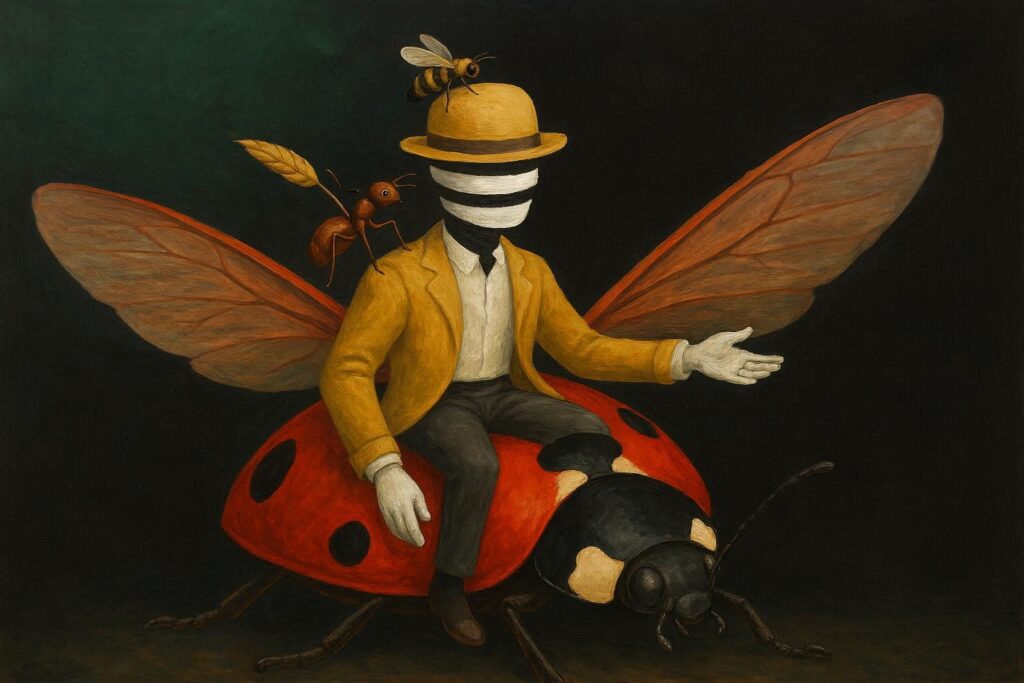
English Version Gli Insetti Guardare oltre.Non è un luogo in cui si arriva. È un modo di stare al mondo.Guardare oltre significa rifiutare la prima impressione, resistere all’istinto, andare a cercare quello che si nasconde sotto la superficie delle cose. È un esercizio difficile — e proprio per questo non è per tutti. Richiede coraggio. Richiede curiosità. Richiede la volontà di mettere in discussione ciò che crediamo di sapere.Prendiamo gli insetti.La reazione immediata è quasi universale: disgusto, fastidio, paura. Li schiacciamo senza pensarci. Li ignoriamo. Li consideriamo estranei al nostro mondo, o peggio — invasori di esso.Eppure sono qui da 480 milioni di anni. Molto prima di noi. Molto prima dei dinosauri.Fermarsi. Guardare davvero. È lì che accade qualcosa di inaspettato.Sotto quelle antenne, quelle zampe, quegli occhi composti che ci sembrano alieni, c’è una perfezione costruita nel tempo. L’ape che architetta celle esagonali con precisione matematica assoluta. La farfalla che muore come bruco e rinasce in un liquido primordiale, le sue ali ricoperte di scaglie che manipolano la luce — non pigmento, pura fisica. La formica che, senza un leader, costruisce città sotterranee con ospedali, discariche, sistemi di ventilazione. La libellula che caccia con il 95% di successo — il record assoluto del regno animale.Bellezza. Ingegno. Forza.Tutto nascosto a chi non si ferma abbastanza a lungo da guardare.L’oltre non è riservato agli scienziati o ai poeti.È disponibile a chiunque decida — almeno una volta — di non fidarsi della prima occhiata. Di chiedersi: cosa c’è davvero, qui? Gli insetti non chiedono di essere amati. Chiedono solo di non essere ignorati.E forse, imparando a guardarli, impariamo qualcosa di più grande: che il mondo è sempre più ricco di quanto sembri. Che la bellezza non abita solo dove siamo abituati a cercarla. Che guardare oltre — davvero oltre — cambia il modo in cui si vive. Informazioni Generali Nome del progetto Gli Insetti Dove lo troverai Tutto intorno a te, nelle strade della tua città Anno di Inizio del progetto 2023 Il Messaggio Gli insetti non chiedono di essere amati. Chiedono solo di non essere ignorati Bugs Looking beyond. It isn’t a place you reach. It’s a way of being in the world. To look beyond means refusing the first impression, resisting instinct, going to search for what hides beneath the surface of things. It’s a difficult exercise — and precisely for that reason, it isn’t for everyone. It requires courage. It requires curiosity. It requires the willingness to question what we think we know. Take insects. The immediate reaction is almost universal: disgust, annoyance, fear. We crush them without thinking. We ignore them. We consider them foreign to our world, or worse — invaders of it. And yet they’ve been here for 480 million years. Long before us. Long before the dinosaurs. Stopping. Truly looking. That’s where something unexpected happens. Beneath those antennae, those legs, those compound eyes that seem alien to us, there is a perfection shaped by time. The bee that designs hexagonal cells with absolute mathematical precision. The butterfly that dies as a caterpillar and is reborn in a primordial liquid, its wings covered in scales that manipulate light — not pigment, pure physics. The ant that, without a leader, builds underground cities with hospitals, waste dumps, ventilation systems. The dragonfly that hunts with a 95% success rate — the highest in the animal kingdom. Beauty. Ingenuity. Strength. All hidden from those who don’t stop long enough to see. The “beyond” isn’t reserved for scientists or poets. It’s available to anyone who decides — at least once — not to trust the first glance. To ask: what is really here? Insects don’t ask to be loved. They only ask not to be ignored. And perhaps, by learning to look at them, we learn something larger: that the world is always richer than it seems. That beauty doesn’t live only where we’re used to searching for it. That looking beyond — truly beyond — changes the way we live. Tracce di fortuna Partenope Mondo marcio La mosca bianca La Lucciola La formica operosa Insieme Insieme 2
I Giocolieri
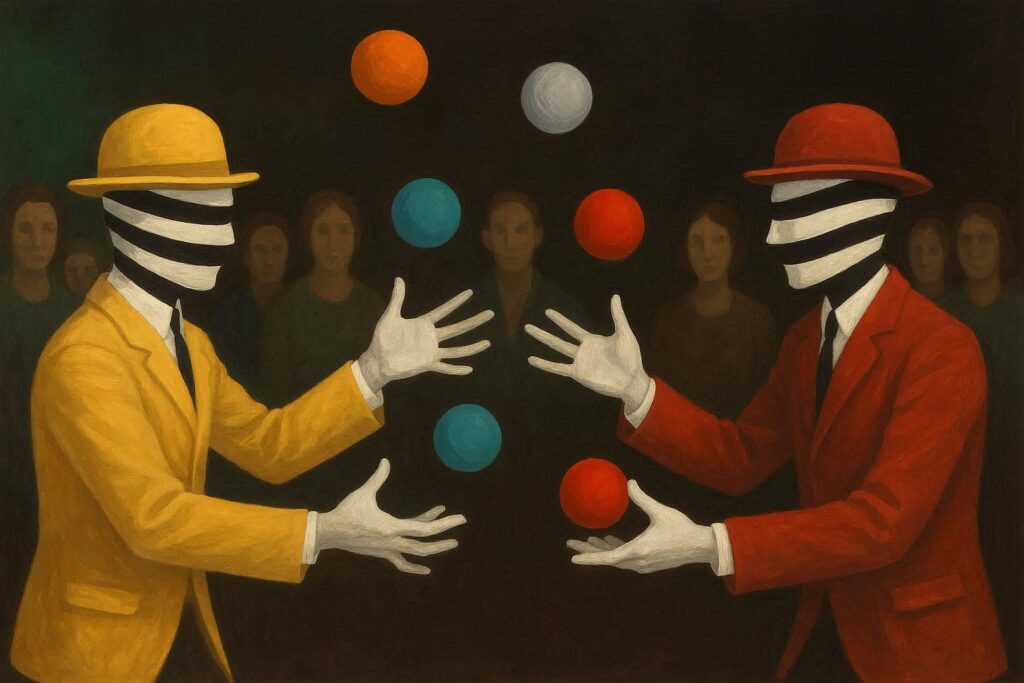
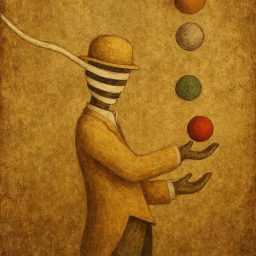
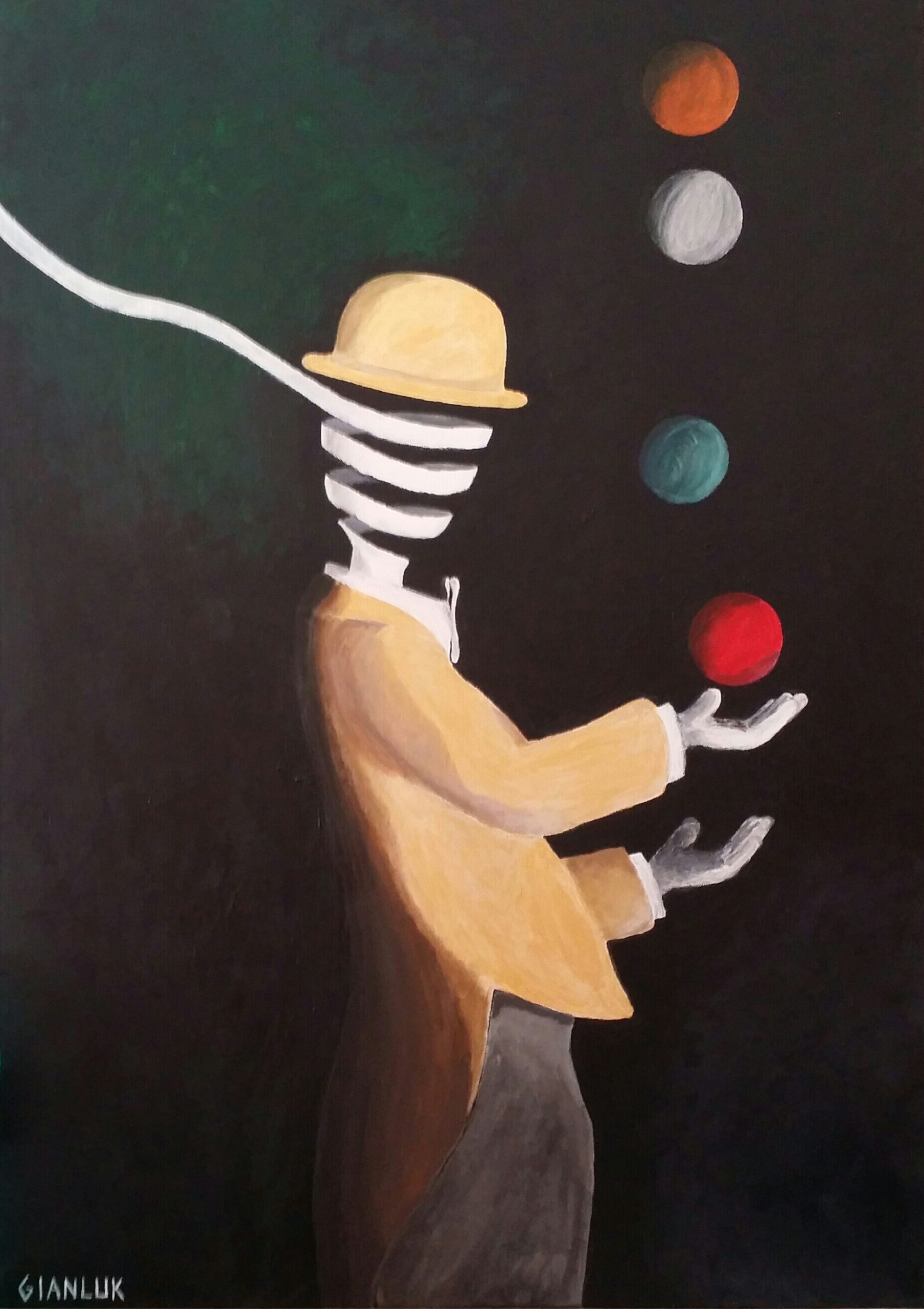
English Version I Giocolieri. Guardare Oltre Guarda bene. Ancora più in fondo.Quelle che il giocoliere lancia in aria non sono palline. Sono sfere antiche — corpi celesti strappati all’orbita, mondi interi che obbediscono alla gravità di una sola mano umana. E quella mano non appartiene a un artista di strada, appartiene a qualcuno che ha imparato il segreto più custodito dell’universo:”che ogni cosa, se la guardi abbastanza a lungo, smette di essere quello che credevi”.Il volto? Anche quello inganna. Sotto la maschera del giocoliere c’è qualcos’altro — un profilo che affiora da un’altra epoca, da un mito che non ricordi ma che riconosci. Il dio della soglia. Il custode degli equilibri impossibili. Colui che sta tra il cadere e il volare, tra il caos e la forma.Siamo diventati una civiltà di sguardi veloci. Scorriamo, passiamo, dimentichiamo. Trattiamo il mondo come uno sfondo — sempre uguale, sempre irrilevante. Ma il giocoliere ci sfida: fermati. Resta qui. Aspetta che la realtà si apra.Perché è proprio lì, in quell’attimo di indugio, che accade tutto. La pallina diventa pianeta. Il volto diventa mito. Lo spettacolo diventa rivelazione.Soffermarsi non è perdere tempo. È il modo più antico e più sovversivo di conoscere.Il giocoliere lo sa da sempre. Informazioni Generali Nome del progetto I Giocolieri. Guardare Oltre Anno di Inizio del progetto 2016 Il Messaggio del Progetto Guardare Oltre Jugglers. See Beyond Look closely. Deeper still. That the juggler throws into the air are not balls. They are ancient spheres — celestial bodies torn from their orbit, entire worlds obeying the gravity of a single human hand. And that hand does not belong to a street performer, it belongs to someone who has learned the most guarded secret of the universe:”That everything, if you look at it long enough, stops being what you thought it was”. The face? That deceives too. Beneath the juggler’s mask lies something else — a profile emerging from another age, from a myth you don’t remember but somehow recognize. The god of the threshold. The keeper of impossible balances. The one who stands between falling and flying, between chaos and form. We have become a civilization of quick glances. We scroll, we pass, we forget. We treat the world like a backdrop — always the same, always irrelevant. But the juggler challenges us: stop. Stay here. Wait for reality to open. Because it is right there, in that moment of hesitation, that everything happens. The ball becomes a planet. The face becomes a myth. The performance becomes revelation. Lingering is not wasting time. It is the oldest — and most subversive — way of knowing. Viaggio in un sogno dantesco Tra Musica e Magia Punti di vista La magia del tempo l’eleganza del giocoliere interstellar Imparare a sognare Il giocoliere Il giocoliere rosso
I Disegni
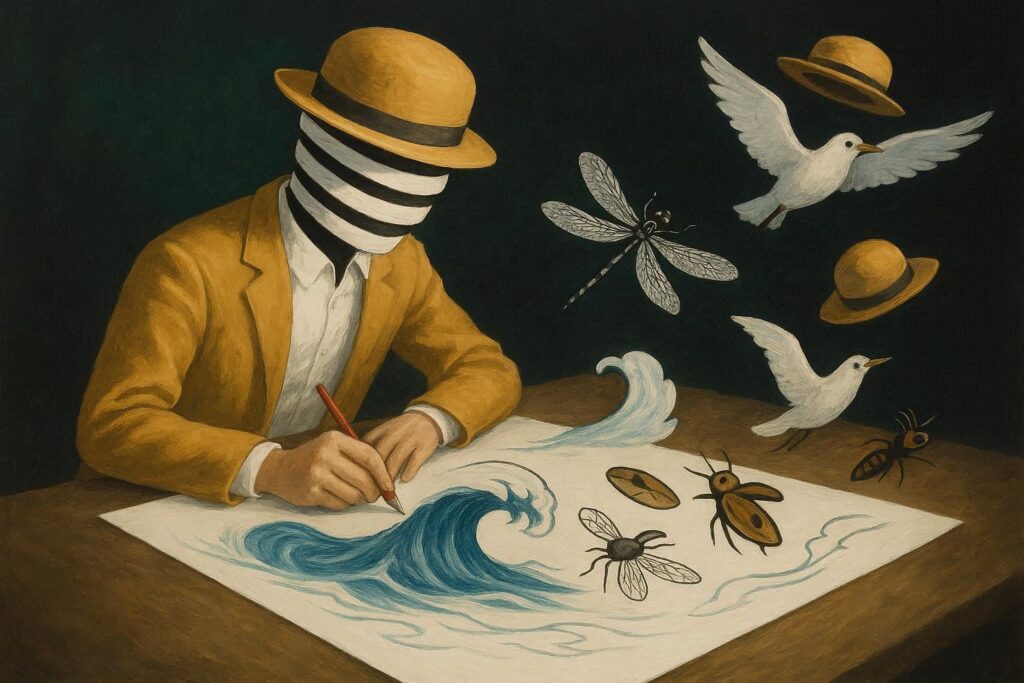
English Version Disegni Nel ciclo I Disegni inseguo ciò che appare e scompare in un istante: figure-soglia, presenze che emergono come oracoli silenziosi. Ogni volto, ogni gesto, ogni frammento è un segno che affiora dal profondo, una traccia di ciò che non ha ancora trovato parola. Il segno diventa rito: una linea che apre varchi, un’ombra che custodisce un enigma, un colore che vibra come un ricordo antico. Questi disegni non descrivono: rivelano. Sono mappe interiori, piccoli talismani che trattengono il passaggio di un’emozione, di un sogno, di un pensiero in fuga. In ognuno di essi cerco la stessa cosa: la scintilla che nasce quando l’invisibile decide, per un attimo, di farsi vedere. Informazioni Generali Nome del progetto Disegni Anno di Inizio del progetto 2020 Draw In the cycle The Drawings, I chase what appears and disappears in an instant: threshold‑figures, presences emerging like silent oracles. Every face, every gesture, every fragment is a sign rising from the depths, a trace of something that has not yet found its words. The mark becomes a ritual: a line that opens passageways, a shadow guarding an enigma, a color vibrating like an ancient memory. These drawings do not describe — they reveal. They are inner maps, small talismans that hold the passing of an emotion, a dream, a fleeing thought. In each of them I search for the same thing: the spark that is born when the invisible decides, for a moment, to let itself be seen.
Installazione “Ciò che non vedi”
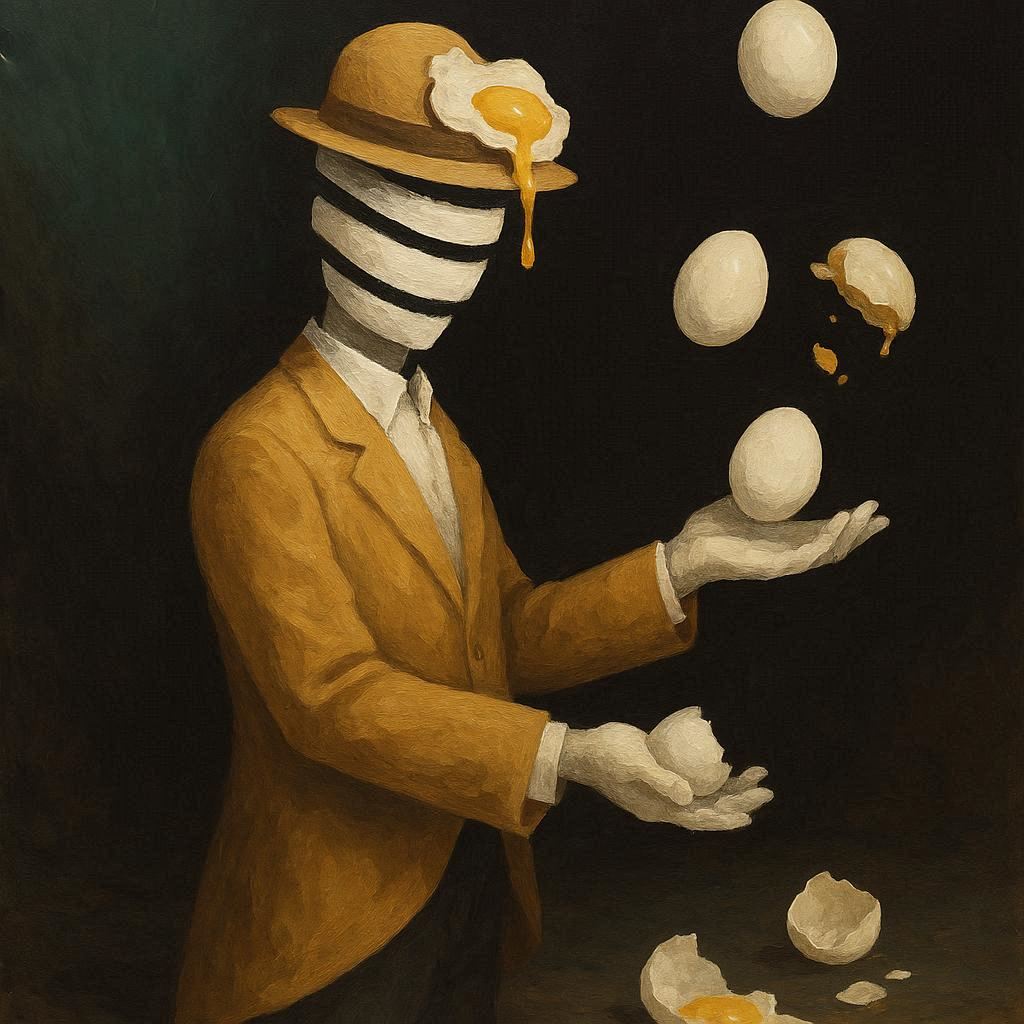
English Version Ciò che non vedi “Ciò che non vedi” è un’installazione artistica nata da un’idea del 2020 e realizzata nel 2023, pensata per offrire al visitatore un’esperienza intima e profonda.In uno spazio raccolto vengono presentate una o più tele raffiguranti uova “magiche”, simbolo della nascita, della possibilità e del mistero della vita. L’opera invita a riflettere su una verità essenziale: la vita è un dono.Durante il percorso, il visitatore è chiamato non solo a osservare, ma anche a vivere l’installazione in prima persona: entrando nella stanza, contemplando i dipinti e scegliendo poi di spegnere la luce per restare per alcuni secondi nel buio. È proprio in quell’oscurità che il senso dell’opera si rivela con più forza: anche nei momenti difficili, quando tutto sembra spegnersi, la vita conserva il suo valore, anche se a volte non riusciamo a vederlo.“Ciò che non vedi” è un invito a fermarsi, sentire, riflettere. A riconoscere che, nonostante il buio, esiste sempre qualcosa di prezioso che continua a brillare dentro e intorno a noi. Informazioni Generali Nome del progetto Ciò che non vedi Cosa Rappresenta Il Dono della Vita Anno di Inizio del progetto 2023 Il Messaggio Nonostante il buio, esiste sempre qualcosa di prezioso che continua a brillare dentro e intorno a noi https://www.gianluk.it/wp-content/uploads/2026/02/uova.mp4 What You Don’t See “What You Don’t See” is an art installation conceived in 2020 and completed in 2023, designed to offer visitors an intimate and profound experience. In a small, enclosed space, one or more canvases depicting “magical” eggs are displayed—symbols of birth, possibility, and the mystery of life. The work invites us to reflect on an essential truth: life is a gift. Throughout the experience, the visitor is called not only to observe but also to live the installation firsthand: entering the room, contemplating the paintings, and then choosing to switch off the light and remain in darkness for a few seconds. It is precisely in that darkness that the meaning of the work reveals itself most powerfully: even in difficult moments, when everything seems to fade, life retains its value, even if we sometimes fail to see it. “What You Don’t See” is an invitation to pause, feel, reflect. To recognize that, despite the darkness, there is always something precious that continues to shine within and around us.
L’ambiente
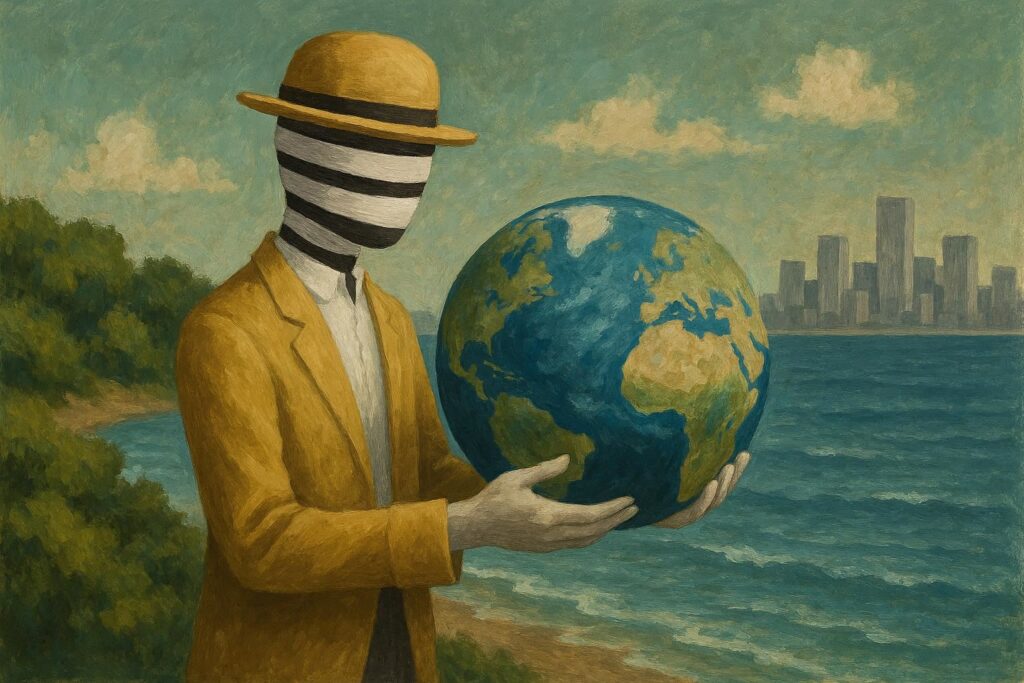
L’ambiente La sezione racchiude opere ispirate dalle problematiche ambientali. L’autore intende sottolineare l’importanza della permeabilità delle persone verso una “nuova” cultura sociale che persegua i bisogni individuali e collettivi delle persone nel rispetto di quelli, anteposti, dell’ambiente in cui viviamo. Informazioni Generali Nome del progetto L’Ambiente Dove lo troverai Tutto intorno a te, nelle strade della tua città Anno di Inizio del progetto 2025 Quando il Progetto terminerà Quando avrò realizzato 99 mattonelle <ahref=”https://www.gianluk.it/wp-content/uploads/2025/11/Civico-al-Quadrato-versione-2.pdf”> Il manifesto del Progetto Qui puoi scaricare il manifesto completo del progetto Environment The section contains works inspired by environmental issues. The author intends to underline the importance of the permeability of people towards a “new” social culture that pursues the individual and collective needs of people in respect of those, in front of them, of the environment in which we live. IL GRIDO DEL MARE L’AMBIENTE IL GRIDO DEL MARE – 2017 IL CASO DELLA “NAVE DEI VELENI” JOLLY ROSSO Misure: cm 80 x 60 Acrilico su tela THE ENVIRONMENT THE CRY OF THE SEA – 2017 Measurements: cm 80 x 60 Acrylic on canvas IMPARARE A SOGNARE L’AMBIENTE IMPARARE A SOGNARE – 2018 Misure: cm 70 x 50 Tecnica Mista Base acrilico su tela – collage – materico THE ENVIRONMENT LEARN TO DREAM – 2018 Measurements: cm 70 x 50 Mixed technique Acrylic base on canvas – collage – material BLU: NATURE MORTE L’AMBIENTE BLU: NATURE MORTE – 2019 Misure: cm 100 x 80 Tecnica Mista Base acrilico su tela – materico THE ENVIRONMENT BLUE: STILL LIFE – 2019 Measurements: cm 100 x 80 Mixed technique Acrylic base on canvas – material IL VIROLOGO L’AMBIENTE(LA PANDEMIA) IL VIROLOGO – 2020 Misure: cm 60 x 40 Acrilico su tela THE ENVIRONMENT(THE PANDEMIC) THE VIROLOGIST – 2020 Measurements: cm 60 x 40 Acrylic on canvas L’UOMO IN QUARANTENA L’AMBIENTE(LA PANDEMIA) L’UOMO IN QUARANTENA – 2020 Misure: cm 60 x 40 Acrilico su tela THE ENVIRONMENT(THE PANDEMIC) THE MAN IN QUARANTINE – 2020 Measurements: cm 60 x 40 Acrylic on canvas DISTANZE L’AMBIENTE(LA PANDEMIA) DISTANZE – 2020 Misure: cm 60 x 40 Acrilico su tela THE ENVIRONMENT(THE PANDEMIC) DISTANCES – 2020 Measurements: cm 60 x 40 Acrylic on canvas IL NEMICO INVISIBILE L’AMBIENTE(LA PANDEMIA) IL NEMICO INVISIBILE – 2020 Misure: cm 60 x 40 Acrilico su tela THE ENVIRONMENT(THE PANDEMIC) THE INVISIBLE ENEMY – 2020 Measurements: cm 60 x 40 Acrylic on canvas LA CITTA’ L’AMBIENTE LA CITTA’ – 2020 Misure: cm 80 x 60 Tecnica Mista Base acrilico su tela – materico THE ENVIRONMENT THE CITY – 2020 Measurements: cm 80 x 60 Mixed technique Acrylic base on canvas – material Next Slide Previous Slide
I Sogni
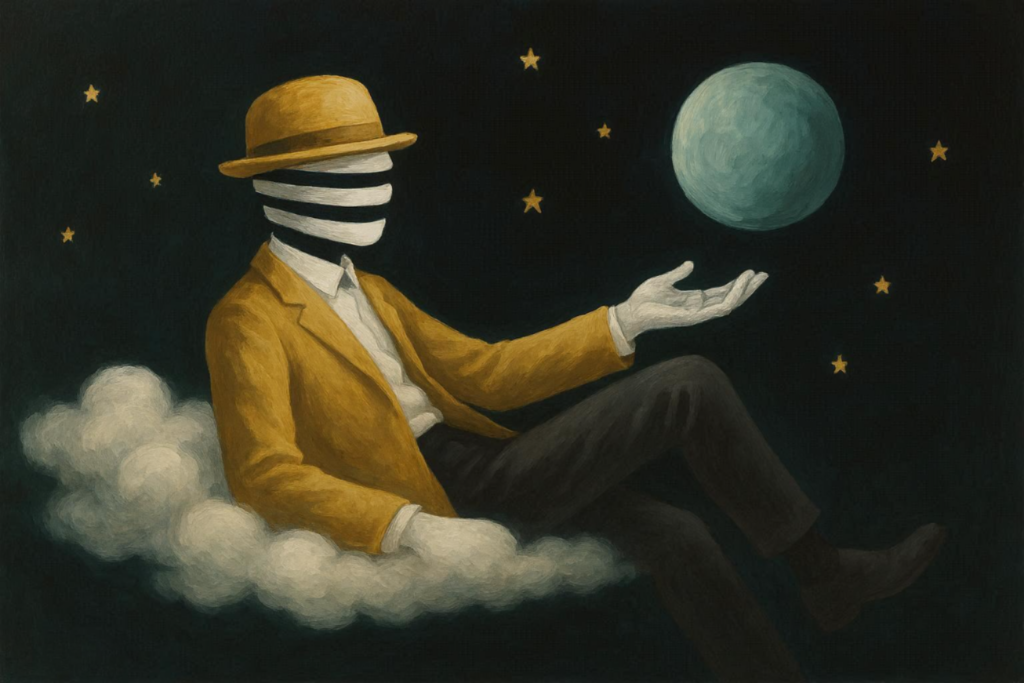
English Version I Sogni L’aereoplanino e il sogno che non atterra mai Chiudi gli occhi. Hai sette anni.Hai piegato un foglio di carta — forse strappato da un quaderno, forse rubato alla risma di tuo padre — con quella concentrazione assoluta che solo i bambini sanno avere. Ogni piega deve essere perfetta. Ogni angolo, preciso. Perché sai, con la certezza che precede ogni ragionamento, che da quella precisione dipende qualcosa di enorme.Poi lo lanci. E per un istante — quell’istante che dura tutta la vita — lui vola.I surrealisti lo sapevano. Lo sapeva Dalí, lo sapeva Magritte, lo sapeva chiunque abbia mai avuto il coraggio di guardare dentro un sogno senza scappare: che la realtà più vera non è quella che si tocca, ma quella che si sente. Che esistono oggetti semplici — un orologio, una mela, un uccello — capaci di portare dentro di sé il peso di un intero universo invisibile.L’aereoplanino di carta è uno di questi oggetti.Non è un giocattolo. Non è mai stato soltanto un giocattolo. È la prima architettura che costruiamo con le nostre mani — e la prima cosa che lasciamo andare. È la scoperta che qualcosa di fragile, fatto di niente, può sfidare la gravità. Che l’imponderabile esiste. Che la magia non richiede formule né bacchette: richiede solo una piega giusta, un respiro, e il coraggio di aprire le dita.Per interi bambini di quella generazione, lanciare un aereoplanino era compiere un atto cosmico. Era partecipare, per qualche secondo di planata perfetta, a qualcosa di più grande — al volo, all’infinito, al sogno nel suo stato più puro e più fisico. Nelle opere di questo ciclo, quegli aereoplanini tornano. Ma il contesto è cambiato. Sono cresciuti, come l’autore. Come noi.Appaiono in paesaggi che non appartengono all’infanzia — o forse le appartengono più di qualunque altro luogo. Fluttuano in spazi sospesi, attraversano confini tra mondi, si posano su superfici che non dovrebbero reggerli. E proprio lì, in quella tensione tra la leggerezza della carta e il peso di tutto ciò che rappresenta, si apre la domanda che ogni sogno porta con sé:Fin dove può arrivare ciò che abbiamo immaginato?La risposta non è nella traiettoria dell’aereoplanino. È nell’occhio di chi lo guarda volare — e riconosce, in quel volo bianco e silenzioso, qualcosa che credeva di aver perduto da tempo.Qualcosa che invece era lì. In attesa. Piegato con cura, pronto a essere rilasciato di nuovo. Informazioni Generali Nome del progetto I Sogni / Dreams Anno di Inizio del progetto 2017 Il messaggio del progetto Sognare è Necessario Dreams The Paper Airplane and the Dream That Never Lands Close your eyes. You’re seven years old. You’ve folded a sheet of paper — maybe torn from a notebook, maybe stolen from your father’s stack — with that absolute concentration only children possess. Every crease must be perfect. Every angle, exact. Because you know, with the kind of certainty that comes before any reasoning, that something enormous depends on that precision. Then you throw it. And for a moment — that moment that lasts an entire lifetime — it flies. The Surrealists understood this. Dalí knew it, Magritte knew it, anyone who ever dared to look inside a dream without running away knew it: the truest reality isn’t the one you can touch, but the one you can feel. That simple objects — a clock, an apple, a bird — can carry within them the weight of an entire invisible universe. The paper airplane is one of those objects. It isn’t a toy. It has never been just a toy. It is the first piece of architecture we build with our own hands — and the first thing we let go of. It is the discovery that something fragile, made of almost nothing, can defy gravity. That the impossible exists. That magic requires no formulas, no wands: only the right fold, a breath, and the courage to open your fingers. For countless children of that generation, throwing a paper airplane was a cosmic act. For a few seconds of perfect glide, they were part of something larger — of flight, of infinity, of the dream in its purest and most physical form. In the works of this cycle, those paper airplanes return. But the context has changed. They have grown, just as the artist has. Just as we have. They appear in landscapes that do not belong to childhood — or perhaps belong to it more than any other place. They float in suspended spaces, cross boundaries between worlds, land on surfaces that should not be able to hold them. And right there, in that tension between the lightness of paper and the weight of everything it represents, the question that every dream carries opens up: How far can what we imagine truly go? The answer is not in the airplane’s trajectory. It is in the eye of the one watching it fly — and recognizing, in that white and silent flight, something they thought they had lost long ago. Something that was still there. Waiting. Carefully folded, ready to be released again. Sognando (i doni di Morfeo) Ritratto di un sogno Imparare a sognare Il sogno americano e la vedova bianca Il sognatore Gli aquiloni